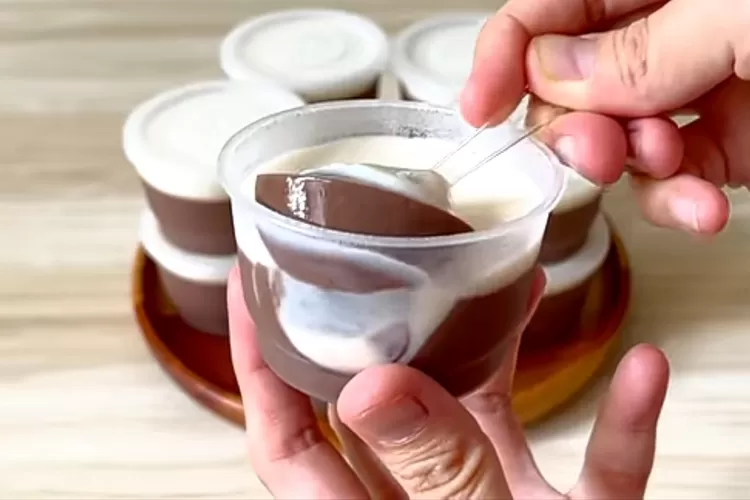
Ensure Smooth Consistency: To prevent lumps in your pudding, sift the cocoa powder and agar-agar powder before mixing them with the other ingredients.
Balance the Sweetness: Adjust the amount of sugar based on your preference and the sweetness of your cocoa powder and chocolate.
Stir Continuously: While cooking the pudding mixture, continuously stir to ensure even heating and to prevent the mixture from sticking to the bottom of the pot.
Melting the Chocolate: Add the dark cooking chocolate to the hot pudding mixture off the heat. This helps the chocolate melt smoothly without burning.
Cooling the Pudding: Before refrigerating, let the pudding cool at room temperature to prevent condensation inside the fridge, which can affect the pudding's texture.
Perfect Custard Thickness: For the vanilla custard, cook until it just starts to thicken. Overcooking can make it too thick and lumpy.
Avoid Skin Formation on Custard: Cover the custard with a cling film, making sure the film touches the surface of the custard. This prevents a skin from forming as it cools.
Unmolding the Pudding: If you’re using a mold for your pudding, briefly dip the bottom of the mold in warm water before unmolding. This helps release the pudding smoothly.
Serving Temperature: Serve the pudding chilled, but the custard at room temperature for the best texture contrast.
Experiment with Toppings: Feel free to add your personal touch with different toppings like whipped cream, fruit, or nuts in addition to the chocolate sprinkles.