
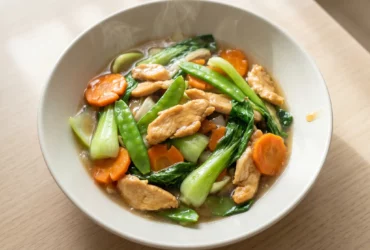
Enjoying a warm plate of this Oriental Capcay recipe on a rainy evening always brings me back to the comfort of legendary Chinese restaurant-style home cooking. The thick gravy, naturally savory from slow-cooked bone broth, blends perfectly with the crunchy texture of flawlessly cooked vegetables. As a result, the dish is never mushy, yet it does not leave a raw taste in the center. There is a distinct warmth in serving this rainbow-colored culinary delight at the dining table for families seeking a nutritious meal that meets high-quality taste standards.
In the past, I frequently encountered specific challenges when cooking this dish; the vegetables would wilt too much, or the chicken would turn out tough and bland. However, after experimenting and dissecting the cooking techniques of specialized Chinese wok chefs, I discovered that the main key lies in the meat marination method and the staging sequence of adding ingredients. Therefore, I have compiled this comprehensive guide so you can replicate this oriental culinary masterpiece directly from your own kitchen.
3 Reasons Why This Oriental Capcay Recipe is Special
- The ‘Velveting’ Marination Technique: Utilizing egg whites, a touch of cornstarch, and baking powder serves to seal the protein’s natural moisture. Consequently, the chicken breast and shrimp remain remarkably juicy and incredibly tender.
- Collagen-Rich Bone Broth: Instead of regular water, this recipe utilizes chicken and beef bones simmered slowly to extract a naturally savory umami base without excessive MSG.
- Staged Cooking System: Adding vegetables gradually to the wok based on their density and hardness ensures every component remains perfectly crunchy and brightly colored.
Ingredient Spotlight & Substitutions
Understanding the technical functions of the ingredients will ease your cooking process. Here are the details and substitution alternatives:
| Main Ingredient | Technical Function | Alternative / Substitution |
| Bone Broth | Forms the natural umami base | Mineral water + Organic mushroom bouillon |
| Fish Cake (Kekian) | Adds a chewy texture variety | Fried silken tofu or sliced shiitake mushrooms |
| Baking Powder | Alters pH to break down meat fibers | A tiny drop of pineapple juice or just cornstarch |
| Cornstarch Slurry | Thickens the gravy to a glossy finish | Tapioca starch (though slightly stickier) |
Regarding the joint benefits of bone broth, you can read more through trusted medical literature. [Insert Study/Journal Link Here]
Anti-Fail Pro-Tips from the Professional Wok
Executing the techniques properly over the fire determines the final outcome.
- Avoid Seasoning During the Boiling Phase: The most common mistake is adding salt when boiling hard vegetables like cauliflower or carrots. Salt triggers osmosis, pulling water out of the vegetables. As a result, they shrink and take much longer to tenderize. Only season the gravy at the very end.
- Maximum Heat for Protein: Ensure the wok is smoking hot before stir-frying the marinated chicken. Furthermore, remove it immediately once the color changes so the juicy meat liquids don’t seep out.
Precise Cooking Instructions
Principally, the process is divided into three main phases: broth preparation, protein marination, and flash stir-frying. Ensure all ingredients are neatly chopped before turning on the stove.
Serving & Storage Suggestions
To align this dish with a calm, minimalist Japandi-style dining room aesthetic, serve your Capcay in cream-toned ceramic bowls or on light wooden elements. This neutral background will elegantly expose the vibrant pigments of your rainbow vegetables.
If there are leftovers, it is highly recommended to separate the thick gravy from the vegetables to prevent them from turning into mush the next day. Store in an airtight container in the refrigerator for a maximum of 2 days. Reheat in a pan without adding extra water.
FAQ: Questions About Cooking Capcay
1. Can this dish be converted to 100% vegetarian?
Absolutely. You can replace the animal-based oyster sauce with a vegetarian mushroom-based oyster sauce, and swap the bone broth with broth made from boiled shiitake mushrooms and daikon radish.
2. Why did my Capcay gravy turn too dark brown?
Excessive soy sauce or oyster sauce measurements are the primary culprit. Use soy sauce merely to elevate the aroma, then rely on salt to catch up on the saltiness level.
3. Is it okay to store leftovers in the freezer?
It is highly discouraged. Vegetables with high water content, like cabbage and mustard greens, will have their cellular structure ruined (becoming completely soggy) after the defrosting process.

Authentic Oriental Capcay Recipe
Ingredients
Method
- Marinate the Meat: Mix the sliced chicken breast and shrimp with the egg white, cornstarch, baking powder, and a pinch of salt. Stir evenly and let it rest for 10 minutes.
- Flash Stir-fry: Heat the wok until smoking. Add a little oil, then quickly stir-fry the marinated meat just until it changes color (about 1 minute). Remove and set aside immediately to lock in the juices.
- Sauté Aromatics: In the same wok, add the crushed garlic. Sauté until slightly browned and fragrant, followed by the sliced onion.
- Hard Vegetable Phase: Pour the bone broth into the wok. Add the carrots, cauliflower, and baby corn. Boil for about 3-4 minutes. Remember: Do not add any salt or seasoning during this phase.
- Adding Remaining Ingredients: Once the hard vegetables are half-tender, add the cabbage, snow peas, mustard green stems, and the previously flash-fried meat.
- Season & Thicken: Add the oyster sauce, soy sauce, salt, sugar, and white pepper. Stir evenly. Toss in the mustard green leaves to keep their color bright. Finally, pour the cornstarch slurry little by little while stirring continuously until the gravy reaches your desired glossy thickness.
- Finishing Aroma: Turn off the stove heat. Drizzle the sesame oil, give it one final circular stir, then immediately remove from the heat and serve.
- Use a carbon steel wok over high heat flames to achieve that signature smoky wok hei aroma typical of flash-cooked Chinese cuisine.